Hyundai Rotem Just Crossed $690 Million in Operating Profit — For the First Time Ever
Hyundai Rotem was once the “ugly duckling” of the Hyundai Motor Group. For years, it posted losses and was considered a drag on the conglomerate. Then the K2 tank happened. In 2025, Hyundai Rotem posted ₩1.01 trillion ($690 million) in operating profit — a 120% increase and the first time in the company’s 49-year history that operating profit crossed the ₩1 trillion mark. Revenue hit ₩5.84 trillion ($4.0 billion). The stock rose from ₩89,000 to ₩274,000 in twelve months.
Yet all 18 covering analysts maintain Buy ratings with an average target of ₩300,000 ($205) — implying 63% further upside from the current ₩184,000. The 52-week range of ₩89,000 to ₩274,000 tells you everything about how rapidly the market’s perception of this company has shifted.
What makes Hyundai Rotem unusual — and potentially under-appreciated by global investors — is its dual-engine structure. This is a company that simultaneously builds main battle tanks and high-speed trains. Defense and rail. Two industries that appear unrelated but share a crucial commonality: both are government-procurement-driven, long-cycle project businesses with predictable revenue streams once contracts are signed.
In our Hanwha Aerospace analysis, we examined the K-Defense phenomenon through the lens of self-propelled howitzers, missiles, and aero engines. Hanwha Aerospace is the “air and sea” defense champion. Hyundai Rotem is the “ground” defense champion — K2 tanks and K808 armored vehicles. Same K-Defense theme, entirely different positioning. And Hyundai Rotem adds a second growth engine — rail — that Hanwha doesn’t have.
Hyundai Rotem builds the K2 tank — one of the most expensive single products Korea exports — and also builds KTX high-speed trains. Defense provides explosive growth; rail provides stability. It’s a rare combination in global defense investing.
✔ How Hyundai Rotem went from perennial losses to its first-ever $690M operating profit
✔ The K2 tank export machine: 36–44% margins that exceed even Hanwha Aerospace
✔ Why the “defense + rail” dual-engine structure is unique in global defense investing
✔ A $20B order backlog — plus Iraq, Romania, and Peru pipeline worth $15B+
✔ An honest take on valuation, cycle risk, and how this compares to Hanwha Aerospace
Hyundai Rotem Financials — What the Numbers Tell Us
| Metric | 2022 | 2023 | 2024 | 2025 |
|---|---|---|---|---|
| Revenue | $2.0B | $2.1B | $3.0B | $4.0B |
| Operating Income | $96M | $134M | $313M | $690M |
| Operating Margin | 4.8% | 6.3% | 10.4% | 17.2% |
| Order Backlog | — | — | $12.9B | $20.4B |
| Total Debt | — | — | $398M | $42M |
| Defense Revenue Share | — | — | ~50% | ~56% |
Source: Hyundai Rotem filings, CEO Score Daily | USD conversions approximate at ₩1,460/$ | FY2025 consolidated
The standout number: operating margin from 4.8% to 17.2% in three years
Revenue doubled from 2022 to 2025. Operating profit grew 7x. This disparity — revenue 2x but profit 7x — reveals the real story: the business model transformed. The driver is defense export margins. When Hyundai Rotem sells K2 tanks domestically, margins are single digits. When it exports to Poland, margins are 36–44%. As Poland export deliveries ramped through 2025 (80+ tanks delivered), the defense export mix reached 70% of defense revenue, pulling overall operating margin from 4.8% to 17.2%.
The balance sheet transformation is equally dramatic. Total debt collapsed from ₩581B ($398M) to ₩62B ($42M) — an 89.4% reduction. Cash on hand reached ₩674B ($461M), meaning cash exceeds debt by more than 10x. The company has effectively transitioned to a net-cash, zero-debt operating model, funded entirely by project advance payments and operating cash flow.
The numbers are clear. But what exactly does Hyundai Rotem make — and why do K2 tank exports generate margins that would make a software company envious?
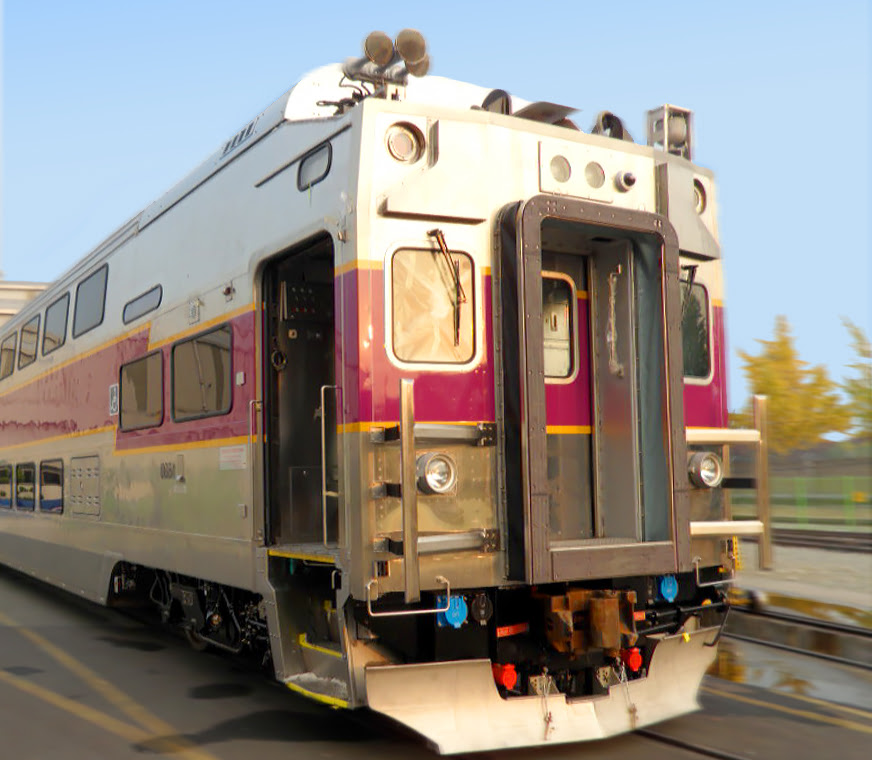
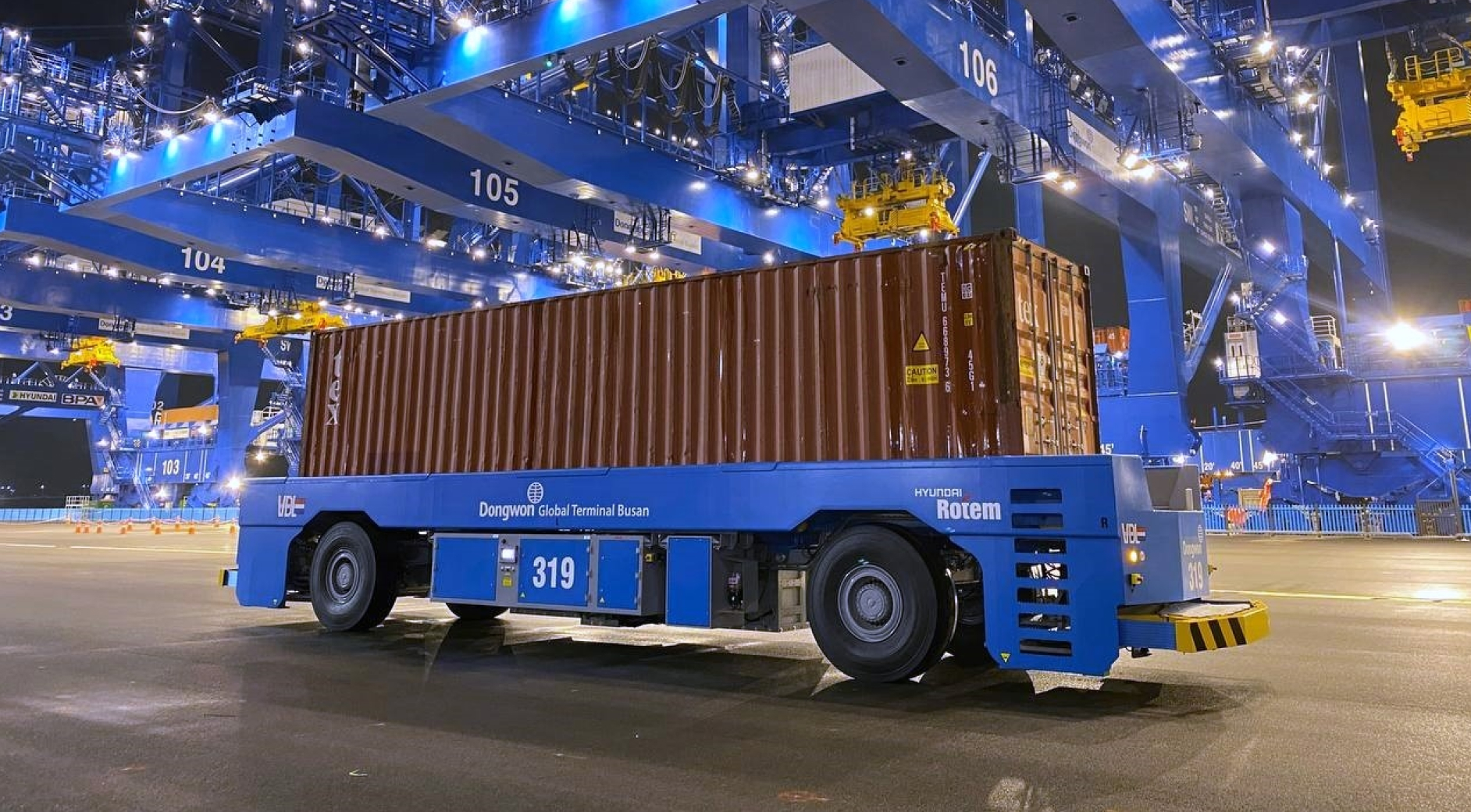
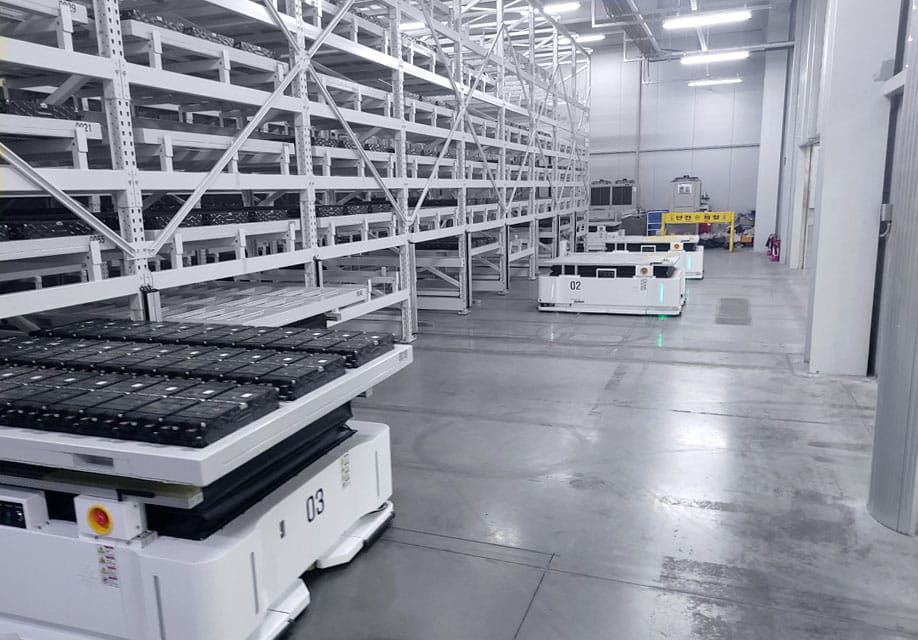
How Hyundai Rotem Makes Money — Business Model Breakdown
Hyundai Rotem, founded in 1977 and part of the Hyundai Motor Group, operates through three segments: Defense Solutions (DS), Rail Solutions (RS), and Eco Plant. In practice, two engines drive the business: tanks and trains.
Pillar 1 — Defense Solutions (~56% of Revenue): The K2 Tank Export Machine
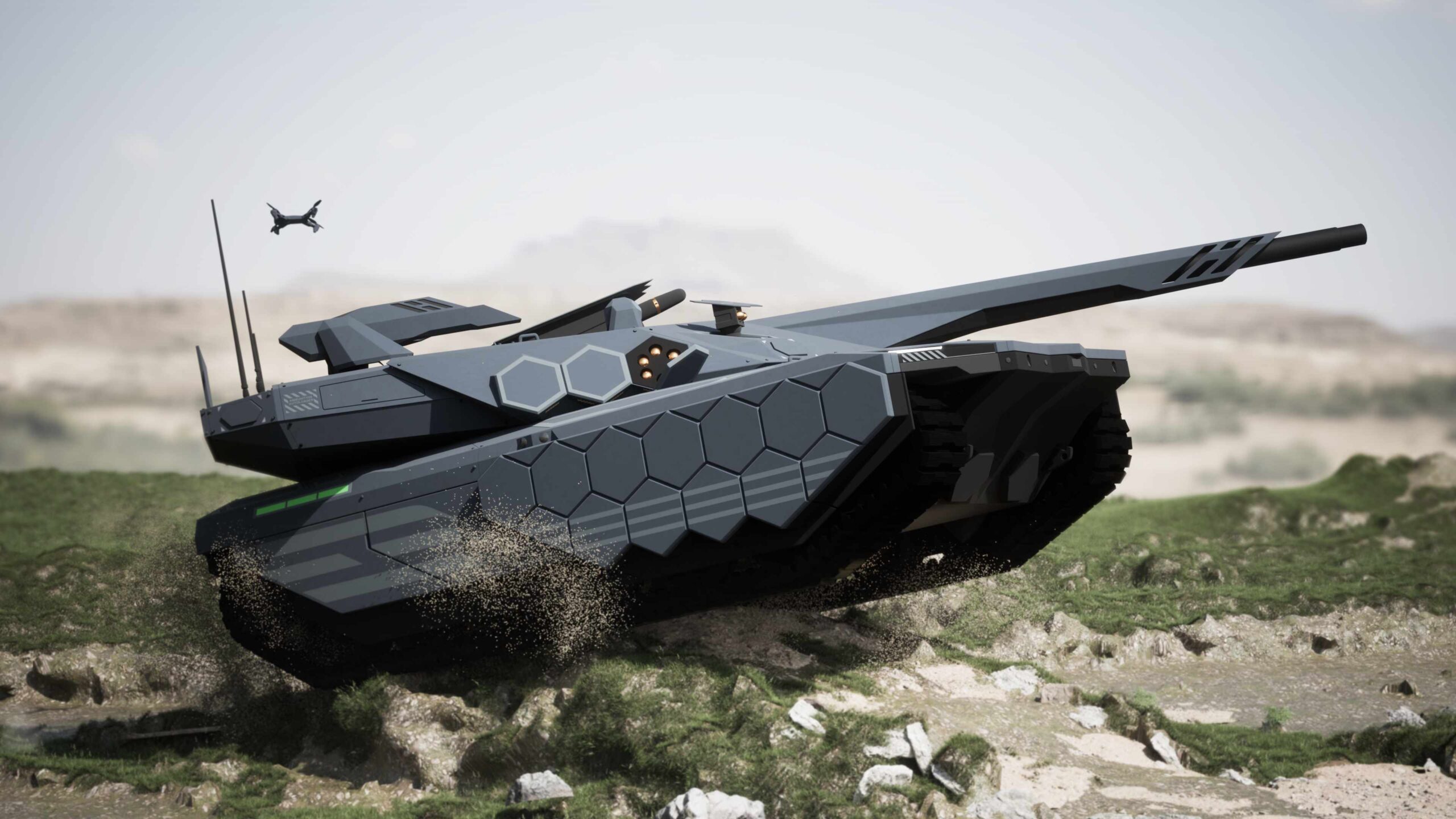
The K2 “Black Panther” is Korea’s indigenous main battle tank (MBT) and arguably the most advanced tank available for export today. At 55 tons, it is significantly lighter than the German Leopard 2A8 (67 tons) and the American M1A2 Abrams (73 tons), giving it superior mobility. It features a 120mm smoothbore gun with autoloader (reducing crew to 3 vs. 4 for Leopard), an active protection system, and advanced fire control. The K2 entered service with the Korean Army and achieved its export breakthrough in 2022 with a 180-unit contract to Poland.
Why does the K2 generate extraordinary margins? First, export pricing is 2–3x domestic unit price. Each K2 is estimated at $8–10M for export, versus $4–5M domestically. Foreign buyers pay a premium for the complete “total solution” package: technology transfer, offset agreements, local production licensing, and 20–30-year maintenance contracts. Second, the production learning curve works in Hyundai Rotem’s favor — after 10+ years of Korean Army production, manufacturing processes are optimized, and marginal costs for additional export units are low. Third, the weak Korean won (₩1,460–1,510/$) amplifies USD/EUR-denominated export revenue when converted to KRW profit.
The K808 wheeled armored vehicle is the second defense product line. Built on a Hyundai commercial truck platform, the K808 can be configured as infantry carrier, command vehicle, medical evacuation vehicle, and multiple other variants. It is included in the Peru deal (141 units) alongside K2 tanks.
Global competitors include KNDS (Krauss-Maffei Wegmann + Nexter, producing the Leopard 2), General Dynamics (M1 Abrams), and Elbit Systems. The K2’s competitive edge is value-for-money: comparable performance to Leopard 2A8 at 20–30% lower cost, faster delivery timelines (Korean manufacturing capacity exceeds European peers), and willingness to offer offset/local production packages that European manufacturers are less flexible on.
Pillar 2 — Rail Solutions (~38% of Revenue): KTX, GTX, and Export Growth
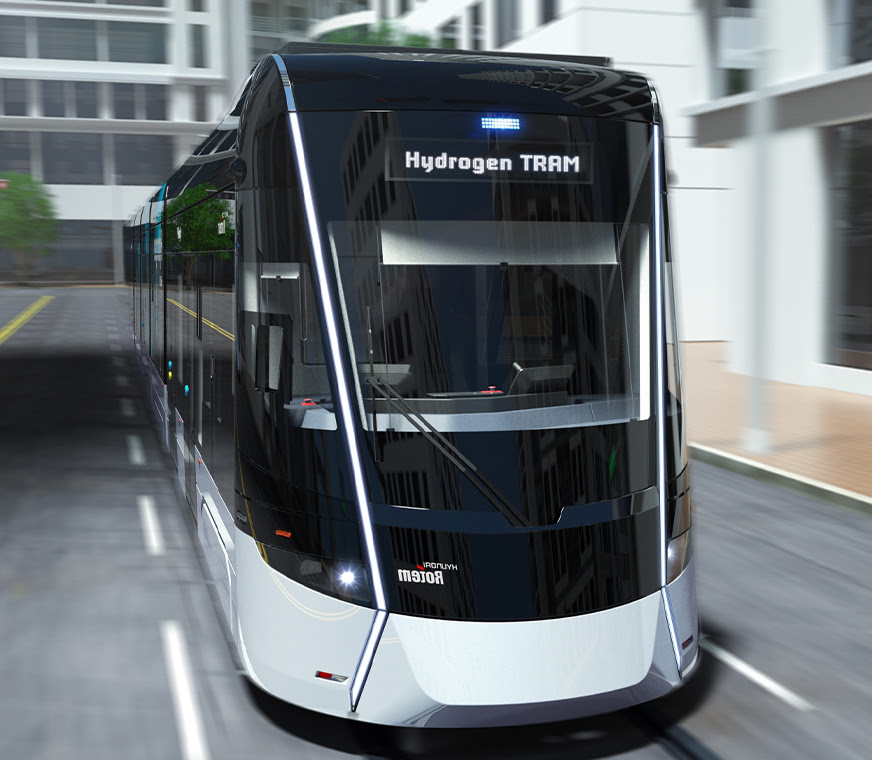
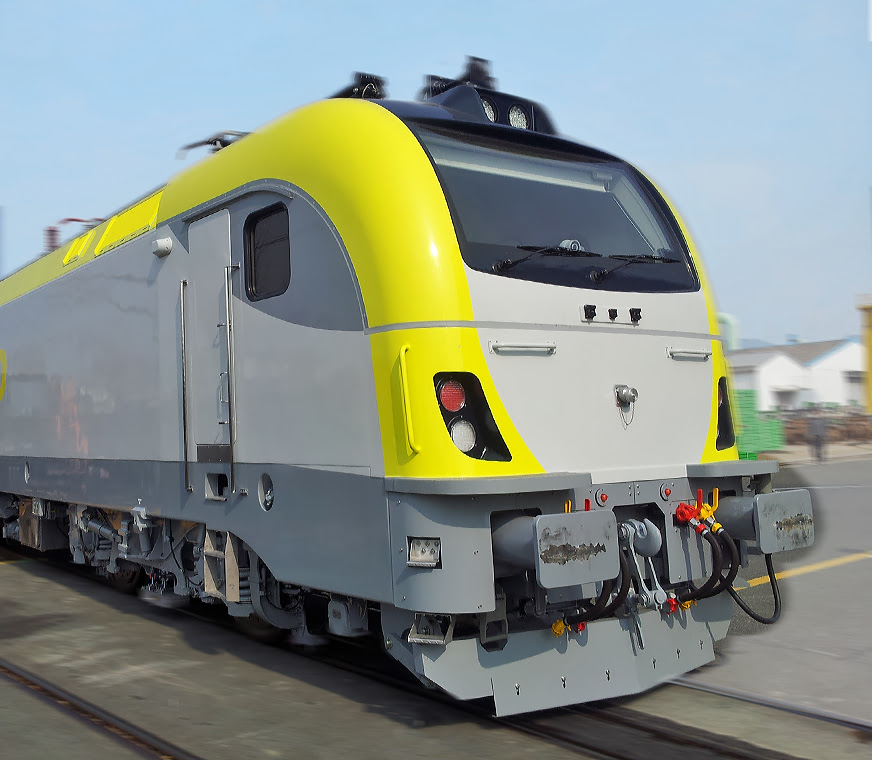
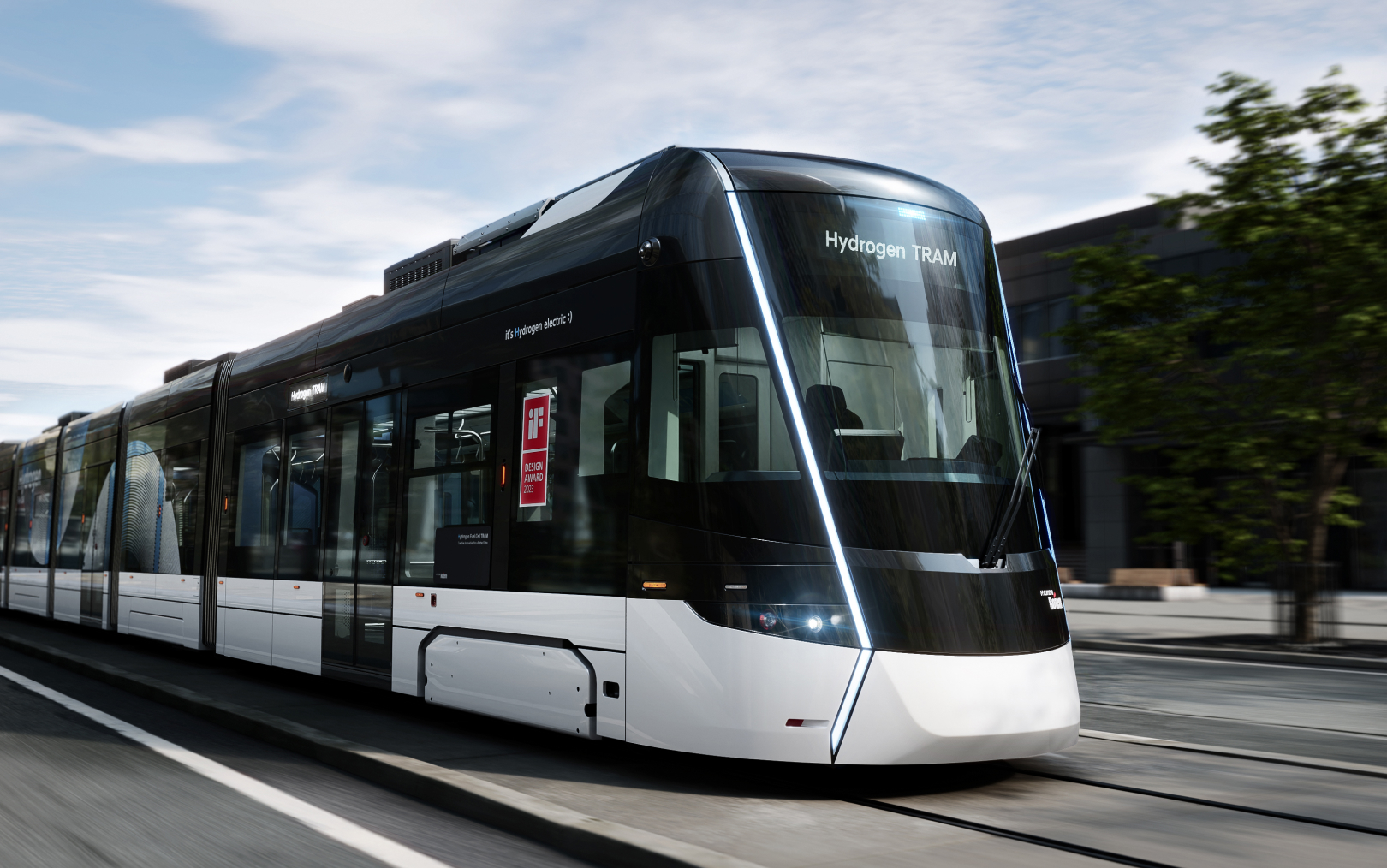
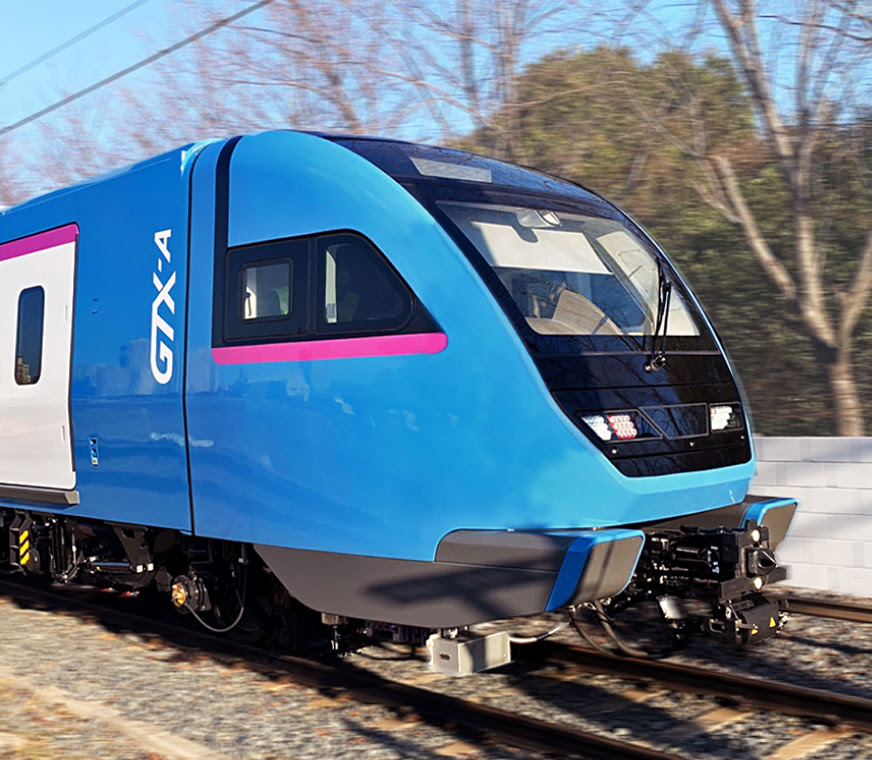
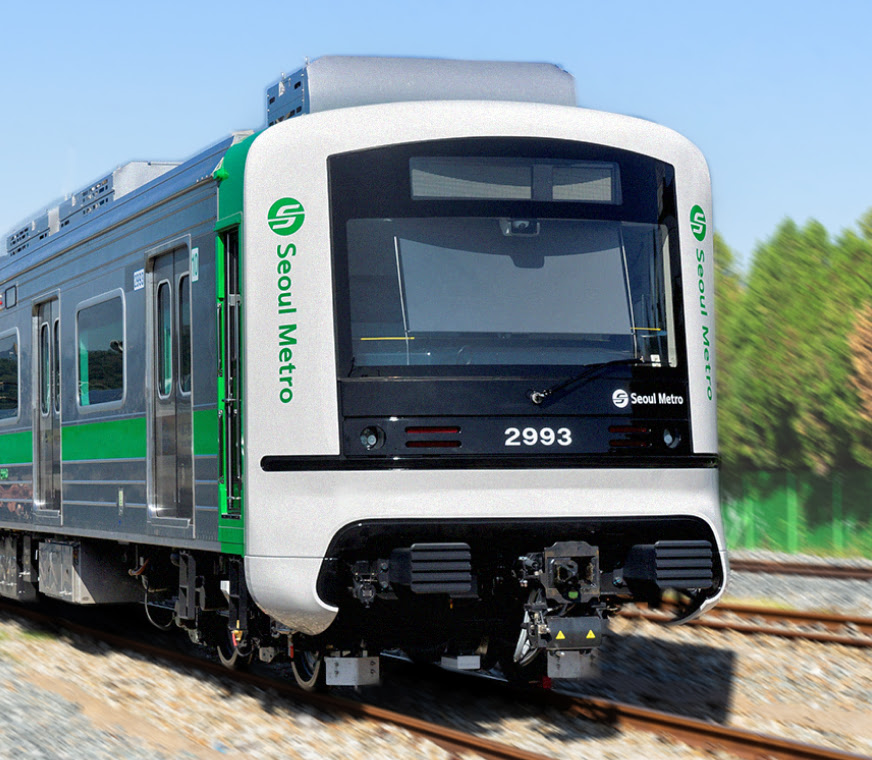
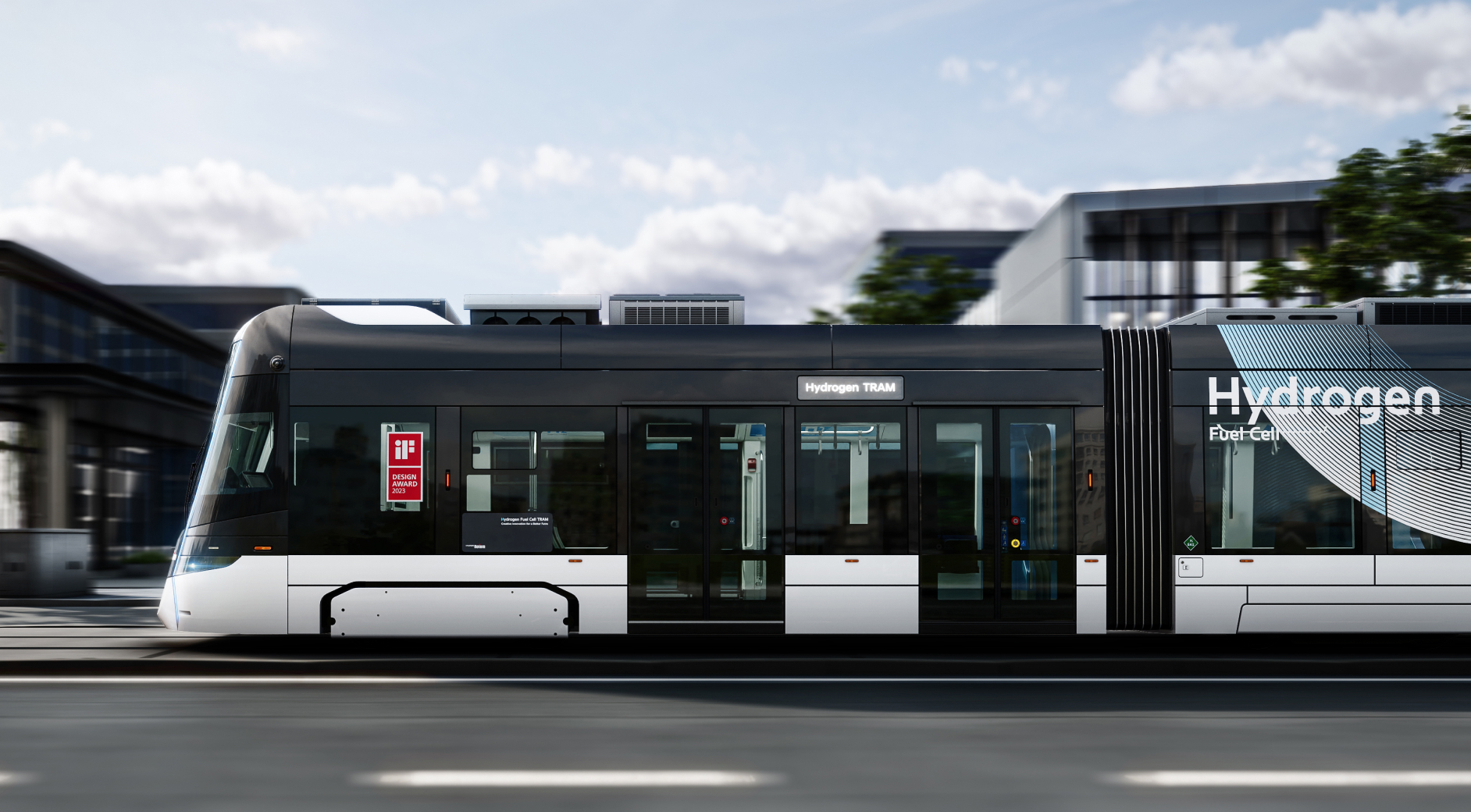
Hyundai Rotem is Korea’s dominant — effectively monopoly — supplier of railway rolling stock. Products include KTX high-speed trains, GTX (Great Train Express) commuter rail, urban metro trains, light rail, and hydrogen-powered trams. Rail revenue reached approximately ₩1.47T ($1.0B) through Q3 2025, up 37% YoY.
The rail business serves a critical portfolio function: stability. Defense contracts are lumpy — a single Iraq deal could be worth $6B but might take 12 months longer than expected to finalize. Rail, by contrast, is tied to government transportation infrastructure plans with predictable ordering cycles. GTX lines A/B/C are under construction, metropolitan rail replacement orders are programmed, and regional light rail expansion is ongoing. This backlog provides a revenue floor regardless of defense timing.
More interesting is the export story. Hyundai Rotem achieved Korea’s first-ever high-speed rail export with a 42-car order for Uzbekistan, delivered ahead of schedule. In Australia, the QTMP (Queensland Train Manufacturing Program) is underway. Hydrogen trams won the Daejeon Line 2 contract, positioning the company in the emerging green mobility market. Rail exports are currently a small portion of rail revenue, but the Uzbekistan milestone signals that Korean high-speed rail technology is export-competitive.
The “what if it didn’t exist” test
The Korean Army’s K2 tanks and K808 armored vehicles cannot be sourced elsewhere. Korea’s KTX and GTX trains cannot be built by another domestic supplier. Poland chose the K2 as its next-generation tank for European defense. Hyundai Rotem is irreplaceable infrastructure for both Korean national defense and transportation.
In the K-Defense ecosystem, Hanwha Aerospace covers air and sea (K9 howitzers, missiles, aero engines), while Hyundai Rotem covers ground (K2 tanks, armored vehicles). Owning both gives complete K-Defense exposure.
The business model is clear. What’s driving the extraordinary momentum right now?
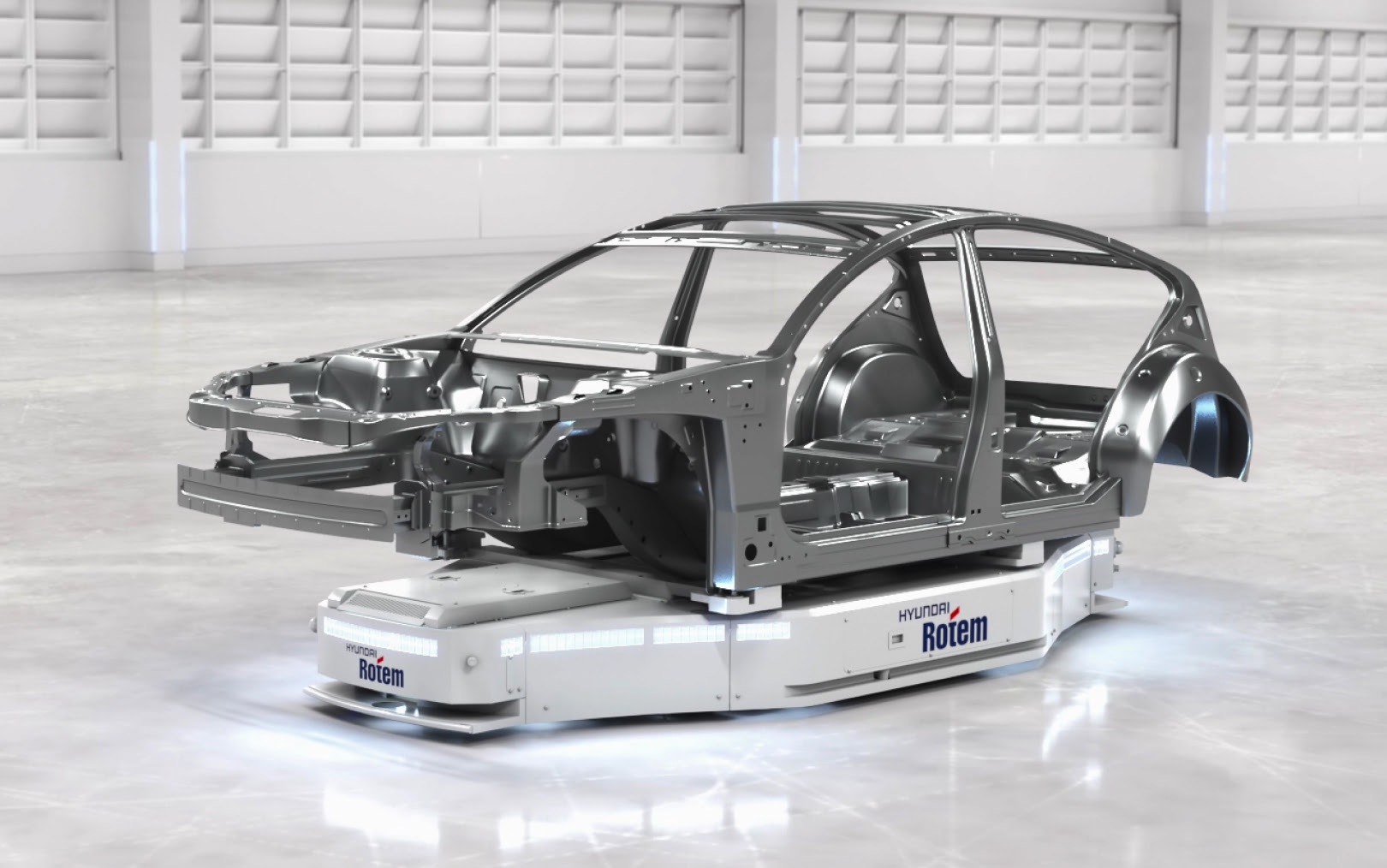
Why Hyundai Rotem Now — The Bigger Picture
Two megatrends are converging: European rearmament and the global rail renaissance.
European rearmament — the structural demand driver
The Russia-Ukraine war triggered the most significant European military buildup since the Cold War. NATO members are pushing toward 2% of GDP on defense — many, including Poland, Germany, and Romania, are targeting 3–4%. Poland, which shares a border with Russia and Belarus, is the most aggressive: it has committed to 4% of GDP on defense and chose the K2 as its next-generation MBT. The initial 180-unit contract is being delivered, with Phase 3 (additional units) under negotiation. Romania is evaluating 216 tanks. The combined European ground armor pipeline represents the largest tank procurement cycle in decades.
Beyond Europe, the pipeline extends to the Middle East and Latin America. Iraq is evaluating 250 K2 tanks in a potential $6.2B deal — the largest single export opportunity in Hyundai Rotem’s history. Peru has signed a framework agreement for 54 K2 tanks plus 141 K808 armored vehicles, with implementation contract targeted by June 2026. Saudi Arabia and Morocco are also in early-stage discussions.
Why K2 wins in competitive bids
In a market dominated by Leopard 2 and M1 Abrams, the K2 offers a compelling value proposition. It delivers comparable or superior performance at 20–30% lower cost. It can be delivered faster — Korean defense manufacturing capacity is less constrained than KNDS’s European production lines, which are backlogged for years. And Korea is willing to offer technology transfer and local assembly packages that European manufacturers have historically been reluctant to provide. The Trump administration’s pressure on NATO allies to increase defense spending has accelerated procurement timelines, and buyers who need tanks fast are choosing K2 over the multi-year European waiting list.
Global rail investment
Urbanization, carbon reduction targets, and congestion relief are driving rail investment globally. Europe aims to double its high-speed rail network by 2030. Southeast Asia and the Middle East are planning major rail infrastructure programs. Korea domestically is expanding GTX, metropolitan rail, and regional light rail. Hyundai Rotem, having proven its export capability with Uzbekistan and Australia, is positioned to capture an increasing share of this expanding global market.
3 Reasons to Watch Hyundai Rotem
Catalyst 1 — $20B Order Backlog, 5x Annual Revenue
Hyundai Rotem’s order backlog surged 58.7% to ₩29.8T ($20.4B) — more than 5x annual revenue. Defense backlog exceeded ₩10T ($6.8B) for the first time; rail backlog stands at ₩18T+ ($12.3B).
This $20B backlog secures 5+ years of revenue at current run rates. But the real excitement lies in what’s not yet confirmed. Iraq (250 tanks, ~$6.2B), Romania (216 tanks), Peru (54 tanks + 141 armored vehicles), Poland Phase 3, and Saudi Arabia/Morocco pipeline. If just one of these materializes, the backlog breaks $27B — a level that would force the market to fundamentally re-rate the company. Analysts project Iraq and Peru contracts will be finalized in H2 2026, though political dynamics in both countries could shift timelines.
Catalyst 2 — Defense Export Margins of 36–44% Exceed Even Hanwha Aerospace
Hyundai Rotem’s defense export operating margin of 36–44% is the highest in K-Defense — exceeding even Hanwha Aerospace’s ground defense margin of 24.7%.
The margin structure is driven by four factors: premium export pricing (2–3x domestic), production learning curve efficiencies from a decade of Korean Army manufacturing, favorable KRW/USD exchange rate, and high domestic content ratio minimizing foreign component exposure. In Q3 2025, defense export represented 70% of defense revenue. As Poland Phase 3, Iraq, and Peru orders enter the production pipeline, the export ratio should sustain or increase — keeping margins elevated through at least 2028.
A frequently overlooked element is aftermarket revenue. Countries that adopt the K2 become locked into 20–30-year relationships for ammunition, spare parts, maintenance, and upgrades. This aftermarket stream typically carries even higher margins than initial unit sales and creates compounding recurring revenue.
Catalyst 3 — Defense + Rail Dual Engine: Downside Protection with Upside Optionality
Hyundai Rotem’s most distinctive structural advantage is the combination of defense and rail in a single company. This pairing is exceptionally rare among global defense firms.
Defense and rail operate on different cycles. Defense is driven by geopolitics — wars, security threats, arms races. Orders are large but irregular. An Iraq contract might slip six months due to political transitions. Rail, by contrast, follows predictable government infrastructure planning. GTX construction is underway with fixed delivery schedules. Metropolitan rail replacement orders are programmed years in advance. Defense is the “explosive growth engine”; rail is the “steady stability engine.”
For investors, this creates a compelling risk/reward profile: limited downside (rail provides a revenue floor even if defense orders pause) with significant upside optionality (each confirmed export deal adds billions to the backlog). This structural advantage differentiates Hyundai Rotem from Hanwha Aerospace, which is more of a defense pure-play.

The investment case is strong. But defense stocks carry unique risks that demand scrutiny.
The Bear Case — Risks You Need to Know
Defense stocks can be exhilarating on the way up and punishing on the way down. The risks here are specific and worth understanding before committing capital.
| ✅ Bull Factors | ⚠️ Bear Factors |
|---|---|
| $20B backlog = 5+ years revenue | Iraq/Romania/Peru timing is uncertain |
| Defense export margin 36–44% | Customer country political risk (regime changes) |
| K2 establishing as global MBT standard | Leopard 2/Abrams competition intensifying |
| Defense + rail dual engine (risk diversification) | Rail margins still at breakeven level |
| Debt reduced 89%, net cash position | Most pipeline deals are “expected” not “confirmed” |
| Poland Phase 3 + Iraq + Peru pipeline | Russia-Ukraine ceasefire could reduce rearmament urgency |
| Uzbekistan rail export milestone | China’s CRRC dominates global rail export by volume |
| 18 analysts, all Buy, avg target ₩300K | Stock already 3x in 12 months — expectations priced in |
| Hydrogen tram / green mobility pipeline | Eco Plant segment still at breakeven profitability |
Risk 1 — Order Timing Uncertainty
The single biggest risk is that the headline pipeline deals — Iraq (250 tanks, ~$6.2B), Romania (216 tanks), Peru (54+141 vehicles) — are at the “framework agreement” or “evaluation” stage, not “signed contract” stage. Customer-country political changes, budget reallocations, competitor lobbying, and diplomatic shifts can all delay or derail deals. Analysts realistically expect H2 2026 finalization for Iraq and Peru, but the market has already partially priced in this expectation. If these deals slip to 2027 or are scaled down, the stock could face meaningful corrections.
Risk 2 — Geopolitical Dependency
The defense boom is directly tied to the post-Ukraine European rearmament cycle. If the war ends and European threat perception diminishes, the urgency to procure ground armor could soften. However, European defense budget increases are being legislated — not merely pledged — making a rapid reversal unlikely. NATO’s 2% GDP floor has effectively become a minimum, with several members pushing to 3–4%. The structural shift in European defense posture appears durable, though the pace of procurement could moderate.
Despite these risks
The confirmed $20B backlog alone secures 5+ years of revenue. Pipeline deals are upside, not base case. The 63% gap between current price (₩184K) and analyst consensus (₩300K) provides a significant margin of safety. And the rail division provides a revenue floor that limits downside in a defense slowdown scenario.
My Take — Here’s How I See Hyundai Rotem
Hyundai Rotem is the highest-optionality name in the K-Defense complex. Hanwha Aerospace has a larger confirmed backlog and more diversified defense portfolio, but its stock already trades at P/E 47x — the growth is largely priced in. Hyundai Rotem’s ₩184K stock price with a ₩300K target implies 63% upside — the widest gap in the series. The question is whether the “expected” pipeline becomes “confirmed.”
A single K2 tank sells for $8–10 million. Iraq alone is evaluating 250 units. If that deal closes, it’s worth $2 billion in revenue and potentially $700M+ in operating profit — from one contract. That’s the optionality embedded in Hyundai Rotem’s stock price.
Bull scenario
Iraq or Peru contract confirmed in H2 2026. Backlog jumps to $27B+. Market reclassifies Hyundai Rotem as a global ground defense leader. 2027–2028 revenue reaches $5.5–6B with $1.0–1.4B operating profit. Target price ₩350K+ ($240). Rail export wins (India, Middle East) add a second growth narrative.
Bear scenario
Major pipeline deals slip to 2027+. Russia-Ukraine ceasefire reduces European procurement urgency. Stock ranges sideways at ₩150K–180K as expectations reset. Confirmed backlog prevents a collapse, but the re-rating thesis stalls. Rail provides stability but doesn’t compensate for defense disappointment.
For portfolio construction, combining Hanwha Aerospace (air/sea defense, P/E 47x, confirmed backlog) with Hyundai Rotem (ground defense, P/E ~20x, pipeline optionality) creates a comprehensive K-Defense basket with both stability and upside potential.
Hyundai Rotem FAQ
Q. What is Hyundai Rotem’s relationship to Hyundai Motor Group?
Hyundai Rotem is a Hyundai Motor Group affiliate. Hyundai Motor holds approximately 40% of shares. Hyundai’s automotive technology (engines, transmissions, chassis design) is integrated into defense vehicles — notably the K808 armored vehicle, which is based on Hyundai’s heavy truck platform. Despite the group affiliation, Hyundai Rotem operates as an independently listed company.
Q. How does the K2 compare to the Leopard 2 and M1 Abrams?
The K2 weighs 55 tons versus Leopard 2A8’s 67 tons and M1A2’s 73 tons, giving it superior mobility. It features an autoloader (3-crew vs. 4-crew for Leopard), active protection system, and advanced fire control comparable to Western peers. The K2’s primary advantage is price-performance: 20–30% lower cost than Leopard 2A8 with comparable capabilities, plus faster delivery timelines and willingness to offer technology transfer packages.
Q. Can global investors buy Hyundai Rotem stock?
Hyundai Rotem trades on KOSPI (Korea Exchange) under ticker 064350. It is accessible through international brokerages offering Korean equity trading. No ADR listing exists. The stock is KRW-denominated, exposing foreign investors to USD/KRW currency risk. The current exchange rate of ~₩1,460–1,510/$ is favorable for Korean exporters.
Q. Should I buy Hanwha Aerospace or Hyundai Rotem — or both?
They serve different roles in a portfolio. Hanwha Aerospace is the larger, more established K-Defense name with a $25B confirmed backlog and diversified air/sea/ground exposure — but at P/E 47x, much of the growth is priced in. Hyundai Rotem offers higher optionality (63% analyst upside) and the defense+rail dual engine, but carries more execution risk from unconfirmed pipeline deals. Owning both creates complete K-Defense coverage: Hanwha for stability and scale, Hyundai Rotem for ground defense optionality and upside.
The Bottom Line — 3 Things to Remember
One. Hyundai Rotem crossed ₩1 trillion ($690M) in operating profit for the first time in its history, driven by K2 tank exports at 36–44% margins. Operating margin transformed from 4.8% to 17.2% in three years. The $20B order backlog — 5x annual revenue — secures years of production. Debt collapsed 89% and the company now operates on a net-cash basis.
Two. The “defense + rail” dual engine is Hyundai Rotem’s most unique structural advantage. Defense provides explosive growth; rail provides stable revenue regardless of geopolitics. The unconfirmed pipeline — Iraq ($6.2B), Romania, Peru, Poland Phase 3 — represents potential backlog doubling if even partially realized. Each confirmed deal would be a major stock catalyst.
Three. The primary risk is timing and expectations. The stock has tripled in 12 months, partially pricing in pipeline deals that aren’t yet confirmed. A deal delay could trigger correction. But the 63% gap to analyst consensus (₩300K vs. ₩184K current) and the confirmed backlog floor limit downside. For K-Defense exposure, pairing Hanwha Aerospace (air/sea, confirmed growth) with Hyundai Rotem (ground, pipeline optionality) is the most comprehensive strategy.
The K2 tank is one of the most expensive single products Korea exports — $8–10 million per unit. Every tank that rolls off the production line for Poland, Iraq, or Peru transforms Hyundai Rotem’s income statement. This is K-Defense’s ground game, and the game is just getting started.
If you found this analysis useful, consider sharing it with fellow investors who follow defense and industrial themes.
Next up, I’ll be analyzing Samsung Biologics — the global CDMO leader and the crown jewel of K-Bio. An entirely different growth story from defense and infrastructure.
This article is based on data as of April 2026. Updated upon Iraq/Peru contract confirmation.
Disclaimer: This article reflects the author’s personal research and analysis for informational purposes only. It is not a recommendation to buy or sell any security. Investment decisions and their consequences are the reader’s responsibility. Always verify with the latest filings and consult a qualified financial advisor.
Related Reading
- Hanwha Aerospace: $18B Revenue, $25B Backlog — The Rise of a Global Defense Platform
- HD Hyundai Electric: 27.6% Margin, $6.7B Backlog — The AI Power Play
- HD Korea Shipbuilding: $20B Revenue — Inside the World’s Largest Shipbuilding Group
- Doosan Enerbility: The Nuclear Renaissance Play
- SK Hynix Deep Dive: How HBM Is Reshaping the Memory Industry